Decoding IWD: Symbols, Global Impact, and the Fight for Full Rights
Often asked, what is Women's Day? At its heart, International Women's Day (IWD), observed annually on March 8th, is far more than just a date on the calendar. For over a century, it has stood as a powerful global platform dedicated to celebrating the immense social, economic, cultural, and political achievements of women worldwide. Yet, it is equally a critical day for raising awareness about women's equality, advocating for accelerated gender parity, challenging discrimination, and mobilizing for change. It’s a moment for reflection on progress made, and a stark reminder of the significant work that still lies ahead in the quest for full and equitable rights for all women.
The Enduring Legacy: Tracing the Origins of International Women's Day
The roots of International Women's Day delve deep into the early 20th century, a period marked by burgeoning industrialization, widespread labor exploitation, and burgeoning feminist movements across the globe. Women, often at the forefront of demanding better working conditions, shorter hours, and the fundamental right to vote, began to find their collective voice amidst systemic oppression and inequality.
The earliest documented stirrings of a "Women's Day" can be traced back to the United States. In 1907, an estimated 15,000 women bravely marched through the streets of New York City, demanding tangible changes like improved pay, reduced working hours, and suffrage. This surge of activism culminated in the first National Woman's Day, declared by the Socialist Party of America, and observed on February 28, 1909.
The concept swiftly gained international traction. In 1910, at the second International Conference of Working Women held in Copenhagen, Denmark, a visionary woman named Clara Zetkin proposed the radical idea of an annual "International Women's Day." She envisioned a unified day across all nations where women could press for their demands with a collective voice. Zetkin's proposal received resounding approval from over 100 women representatives from 17 countries, marking a pivotal moment in history.
Following this historic conference, the first International Women's Day was celebrated on March 19, 1911, across Austria, Denmark, Germany, and Switzerland. Rallies drew over a million women and men, campaigning vigorously for women's fundamental rights to work, vote, receive training, hold public office, and an end to all forms of discrimination. The specific date of March 8th later became the universally recognized day after Russian women campaigning for peace observed it on February 23, 1913 (which translates to March 8th in the Gregorian calendar). This date has since become the global cornerstone for IWD.
Decades later, its significance was formally recognized when the United Nations began celebrating International Women's Day in 1975, cementing its status as a critical global observance. While the momentum for IWD appeared to wane in some regions by the new millennium, with feminism sometimes seen as a niche topic, its centennial in 2011 reignited global interest. President Barack Obama, for instance, proclaimed March 2011 as 'Women's History Month,' urging Americans to reflect on women's extraordinary accomplishments. To learn more about this incredible journey, delve into The Century of IWD: From Suffrage Marches to Global Recognition.
Symbolism and Celebrations: Decoding the Heart of IWD
Understanding what is Women's Day also means appreciating its powerful symbolism and diverse global observances. At the core of International Women's Day are three distinct colors: purple, green, and white. These colors, adopted from the Women's Social and Political Union (WSPU) in the UK in 1908, carry profound meanings:
- Purple: Symbolizes justice and dignity, representing the foundational principles of equality that women have fought for.
- Green: Represents hope, looking forward to a future where women's rights are fully realized and gender equality is achieved.
- White: Stands for purity, often interpreted in the context of the suffragettes' moral and political purity in their cause.
Beyond these official colors, celebrations vary widely across the globe, reflecting different cultural contexts and priorities:
- In Italy, "La Festa della Donna" sees women traditionally gifted mimosa blossoms, a vibrant symbol of strength and sensitivity believed to have started in Rome post-World War Two.
- In countries like China and Russia, while the day holds serious undertones, it is also a time for expressing appreciation for women, often marked by the sale of flowers and small gifts.
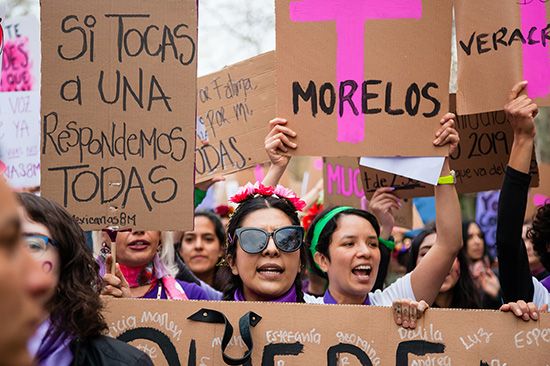
- Conversely, in many other nations, particularly where women's rights are still severely restricted, IWD is a day of fervent protest and advocacy. Activists rally in cities from Karachi, Pakistan, to Istanbul, Turkey, shouting slogans and demanding fundamental freedoms.
- In the United States, while not an official public holiday, the entire month of March is dedicated to Women's History Month, providing an extended period for recognizing and celebrating women's contributions throughout history.
These diverse forms of observance underscore the dual nature of IWD: a joyous celebration of progress and an urgent call to action for the battles yet to be won. For a deeper dive into the reasons behind our celebration, explore Why We Celebrate Women's Day: Achievements, Equality, and Action.
The Unfinished Journey: Global Impact and the Fight for Full Rights
While International Women's Day celebrates remarkable progress, it also highlights the stark reality of the ongoing disparities women face worldwide. The core purpose of the day remains to advance women, lobby for accelerated gender equality, and fundraise for women-focused causes because, despite over a century of activism, full rights for women remain elusive globally.
A sobering statistic from the United Nations reveals that women worldwide hold, on average, only 64% of the legal rights that men have. This isn't just an abstract number; it translates into tangible inequalities in everyday life: persistent gender pay gaps, limited access to education and healthcare, underrepresentation in politics and leadership roles, and alarmingly high rates of gender-based violence. Many women still lack the right to own land, choose their spouses, or even control their own bodies in various parts of the world.
Each year, International Women's Day adopts a specific theme, directing global focus and action toward pressing issues. These themes, whether emphasizing innovation, challenging bias, or promoting specific forms of giving, serve to galvanize efforts and foster targeted initiatives. They remind us that the fight for full rights encompasses economic empowerment, social justice, political participation, and cultural recognition.
Beyond the Day: Actionable Ways to Champion Women's Rights
Understanding what is Women's Day ultimately leads to the crucial question: what can we do to contribute to its mission? The spirit of IWD extends far beyond March 8th. It calls for continuous advocacy and support. Here are practical ways individuals and communities can champion women's rights:
- Educate Yourself and Others: Stay informed about gender equality issues, both locally and globally. Share knowledge and challenge misconceptions within your circles.
- Support Women-Owned Businesses: Actively seek out and patronize businesses led by women. This directly contributes to women's economic empowerment and independence.
- Advocate for Equality in the Workplace: Push for fair pay, equal opportunities, parental leave policies, and an inclusive work environment. Challenge discriminatory practices and biases when you encounter them.
- Mentor and Empower: If you're in a position to do so, mentor young women and girls, helping them develop skills, confidence, and leadership qualities. Support initiatives that aim to empower women through education and vocational training.
- Donate to Women-Focused Causes: Contribute to organizations that work tirelessly to advance women's rights, provide essential services to women in need, and combat gender-based violence.
- Challenge Discrimination and Bias: Actively speak out against sexism, misogyny, and all forms of discrimination in your daily life, whether online or offline. Be an ally and amplify women's voices.
- Vote and Engage Politically: Support candidates who champion women's rights and gender equality. Participate in local and national elections to ensure policies reflect the needs and aspirations of women.
Conclusion
In essence, International Women's Day serves as a vital global touchstone. It encapsulates a century of relentless struggle, celebrated triumphs, and a clear, unwavering vision for a future defined by equality and justice. From its humble beginnings in early 20th-century labor movements to its current status as a UN-recognized observance, IWD reminds us of the power of collective action and the enduring resilience of women. While immense strides have been made, the fight for full and equitable rights—where women hold 100% of the legal rights of men—is far from over. As we continue to honor the remarkable achievements of women, let us also recommit ourselves to the ongoing work, ensuring that the spirit of IWD ignites action every single day, propelling us closer to a truly gender-equal world for generations to come.